Looking to take your lawn care to the next level? With a bit of pre-planning and the right tools, you can achieve those stunning stripes you see on sports fields in your own garden. Become lords and ladies of the lawn with our guide!
 By Alex
- 23rd April 2026
- 4min read
First, your lawn needs to be in great shape
It’s impossible to stripe your lawn if your grass is thin, patchy or unhealthy. This is a marathon, not a sprint – before you do anything, it’s crucial to set the foundations by following these steps to strong and healthy grass.
Level it out
To achieve stripes, your lawn needs to be as flat as possible. Fill in any dips with a mix of soil, sand and compost before adding grass seed, watering frequently. Only mow when the new shoots reach a height of around 6-8cm.
Learn how to level your lawn from start to finish in our blog here.
Scarify
Using a purpose-built scarifier or a garden rake, remove as much thatch as you can – old grass, moss and debris can build up over time, blocking your grass from growing evenly and stopping growth. Don’t be afraid to really go for it and remove as much as you can.
Aerate
The soil underneath your lawn can get compacted, stifling the roots and leading to a limp-looking lawn.
With an aerator or a garden fork, create holes all over your lawn to let it breathe. Your roots will have more room to grow, they’ll have a much easier time absorbing water, and seeds will have more surface area to grow from.
Overseed
Overseeding involves spreading new seeds over an existing lawn to boost growth and thickness. If you want nicely defined lawn stripes, it’s a must.
Measure out the recommended amount of seed for your lawn's size and, either by hand or with a lawn spreader, evenly sprinkle the seed over your entire lawn. Water it in, and keep the soil moist while your new shoots establish themselves.
As well as boosting your existing grass, this will also help to fill in bald spots that have been scarified.
It’s best to do this in late summer/early autumn once it starts cooling down. This way, your lawn will have a chance to establish itself before going dormant over winter. If you overseed in spring, the summer heat could kill your new grass.
Grab a seed mix that includes rye grass. It’s hardwearing, quick to germinate, and its wider leaves lend themselves well to lawn stripes.
How to add stripes to your lawn
Now your lawn is growing strong, it’s mow time!
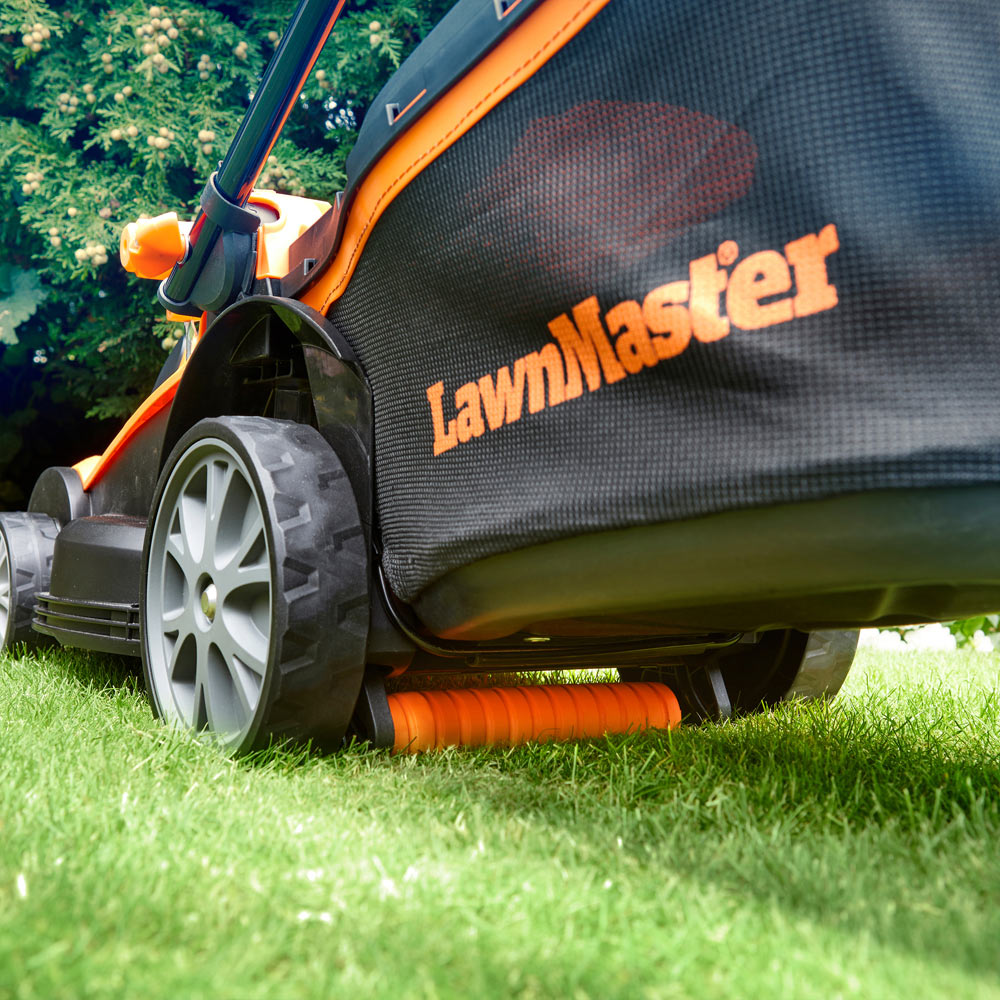
To add stripes to your lawn, a lawn mower with a rear roller is the way to go. These are attached to the back of your mower and flatten the grass down in the direction that you’re mowing. When it’s flattened in opposite directions, it’ll give the impression that your stripes are different colours.
For the most dramatic results, don’t cut your lawn too short. Longer grass will have a darker, richer colour when it’s flattened, as it’ll cover more soil and reflect the light beautifully.
Start mowing your lawn, then switch directions. Take it slow, and line up the front wheel of your mower with the line left by the previous pass to keep it neat.
You may find it easier to mow around the perimeter of your lawn first if you don’t have much room to turn around.
If your mower doesn’t have a roller, you can make your own DIY version with an old piece of pipe and some sand. Cut the pipe down to the same width as your mower blade, fill it with sand, and seal off the ends to create a heavy tube. Attach it to your mower so it drags behind the back and flattens the grass as you go.
Mowing stripes down the length of a rectangular lawn will make it seem longer, whereas stripes along the width will make it seem shorter. As you gain confidence, why not try a criss-cross design for a truly premier finish, or go diagonal for something a little different? For wider stripes, simply mow two lines in the same direction instead of one.
Buy all you need for lawn care and more on Homebase.co.uk
Get in touch with us on: Facebook, Instagram, TikTok, Pinterest, Youtube & X.
