How to choose an air conditioning unit
With summer heatwaves bringing sweltering temperatures, our trusty desk fans simply aren’t cutting it anymore. An air conditioning unit is an efficient and effective way to cool your home in the height of summer, just as important as heating is in winter. With so many models to choose from on Homebase, we’ve put together a rundown of what to look for so you can find the best air conditioning unit for you.
 By Alex
- 1st July 2026
- 6min read
How do air conditioners work?
Compared to fans, which simply move existing air around, air conditioning units remove the hot air in your home and replace it with cool air. The cool air is chilled via the system’s condenser, while hot air is blown outside.
What kinds of air conditioning units are there?
The most popular air conditioners are split systems and portable air conditioning units.
A split system features an internal unit which blows out cool air, and an external unit which deals with the hot air. They’re the more expensive choice and need to be installed by a professional, but they’re a more efficient choice over time. The internal units for split systems are quieter than their portable counterparts and are wall-mounted, which keeps them out of your way.
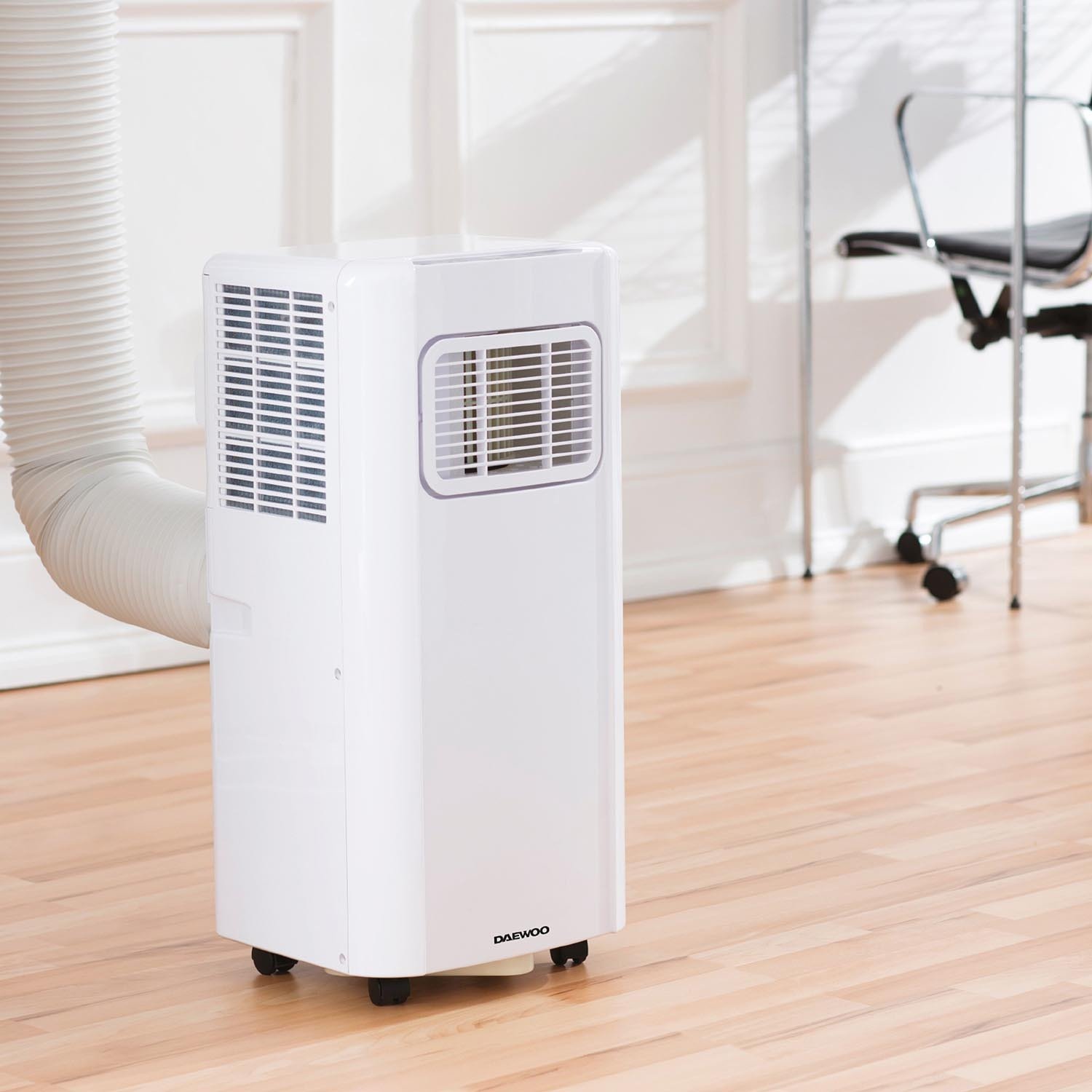
Portable AC units are an all-in-one, with the hot air being dealt with via a hose. They’re cheaper, easier to set up, and can be moved between rooms. However, they aren’t as quiet as split systems and take up floor space – sometimes a challenge in smaller spaces.
What are the benefits of a portable air conditioning unit?
Quick cooling
Once you have your portable air conditioner, it’s simply a case of attaching the hose to a window in your home, switching it on, and feeling the relief of cool air without the need for any professional installation.
Many units come equipped with a window kit, making it an easy job to attach your hose and blow hot air outside without letting in too much outside air. However, these are often made for sliding windows – if your windows open outwards, we’ve got an easy DIY way of making your own window kit later in the blog.
Works in every room
Compared to split units, a portable air conditioner can be moved to whichever room you’re in – as long as there’s an outlet for the hot air hose. So, whether you’re too hot in your home office, sweltering in the sitting room, or your kitchen feels like an oven, you can feel the cooling benefits of air conditioning wherever you are.
Key features to look for:
BTU
This stands for British Thermal Units and relates to the cooling power of your air conditioner. The larger the number, the more powerful the unit.
There are many factors which can influence the BTU needed to cool your room, but we prefer to keep things easy:
- 9,000 BTU air conditioners are good for offices and small bedrooms.
- 12,000 BTU air conditioners are good for master bedrooms and medium-sized living areas.
Higher BTU units are available for large spaces. Many air conditioning units will include an estimate for the floorspace they’re suited to, to make things easier.
Modes
Take a look at various air conditioning units and see what kind of mod-cons they come with. Popular modes on modern air conditioners include:
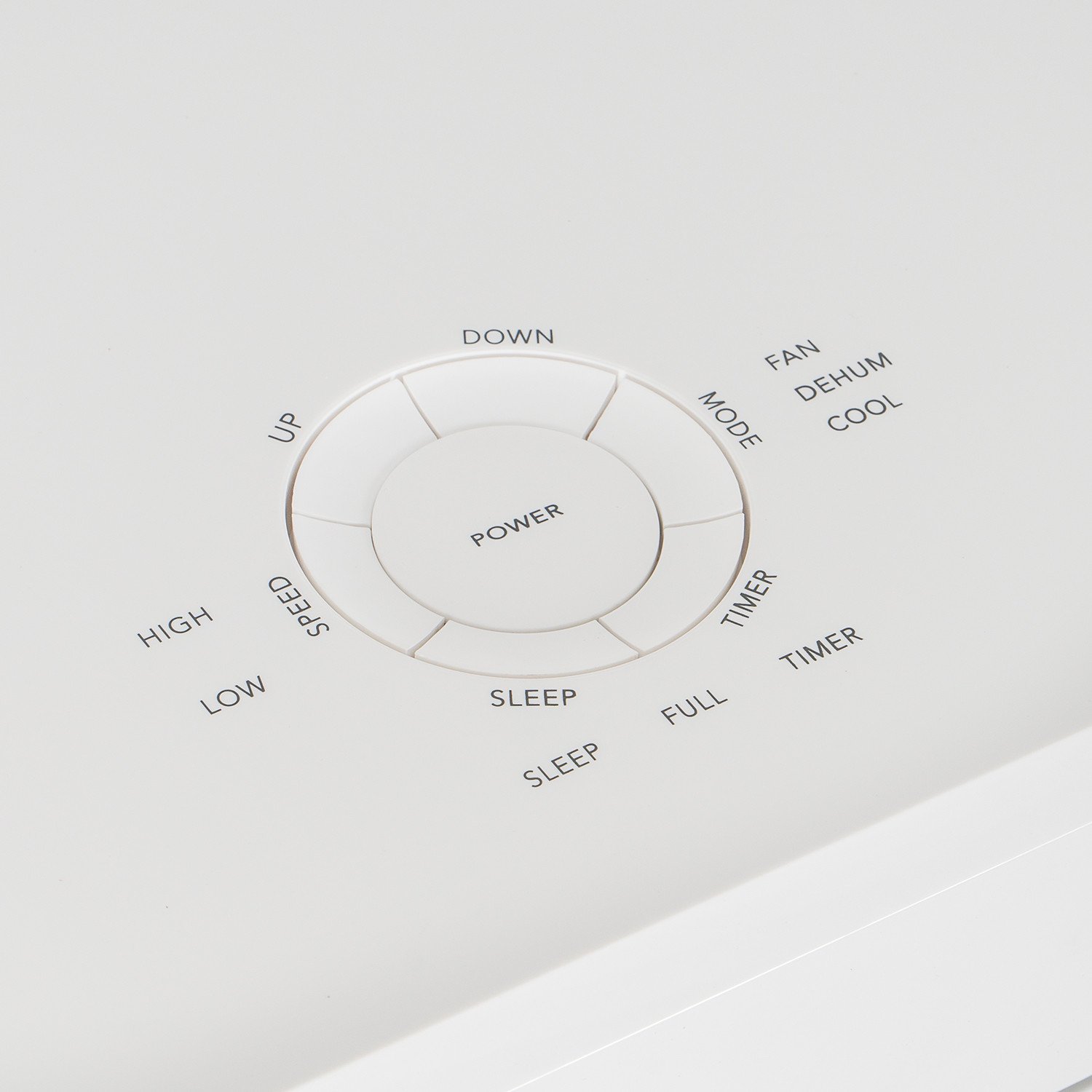
- Sleep mode: A lower-noise setting which makes it easier to sleep with the unit on.
- Timer: Set a schedule for your air con by choosing when it automatically switches on and off.
- Remote control: Easily power your unit on and off, change the temperature and more without having to get up.
- Smart capabilities: Allows you to control your air conditioning unit from an app, letting you remotely control the unit from wherever you are – perfect for making sure your room is nice and cool before you step through the door.
Extra features
Depending on the model, your air conditioner might do more than simply cool a room.
- Fan: This setting uses only the fan setting, without the condenser. It won’t pump out cold air, but it’ll still move air around the room.
- Dehumidifier: Removes moisture from the atmosphere and collects water in a reservoir. Great if your home is prone to damp at any time of year, as it clears the air and lessens the chance of mould.
- Warming: What about when winter rolls around? Some air conditioners also have a heating function! Use this feature to warm your rooms even faster, or use it in an outbuilding for a bit of welcome heat.
Top tips for your air conditioner
- Let your unit sit upright for a few hours before turning it on. Most manufacturers advise letting the refrigerant settle within the system first to avoid damage.
- Don’t put it too close to the wall. Ideally, there should be at least 30cm between the air intake of your machine and the wall to keep it running efficiently.
- Keep the windows shut. All the hard work your air conditioner is doing will be undone if a window is open and letting in hot air. To rapidly cool a room, close the windows, curtains, and doors.
- Get to know your machine. Take advantage of any extra features it has, whether it’s adjusting the fan speed to your liking, setting a schedule, or downloading an app to control it remotely.
How to attach your air conditioner’s hose to the window
Unfortunately, it isn’t as easy as hanging the hose outside – you need a seal around the hose, otherwise you’ll only be letting warm air back in.
Many window kits that are included with air conditioning units are made for sliding windows and won’t work with windows which open outwards. Here’s how to make your own window seal with some simple tools and materials.
You’ll need:
- Tape measure
- Pencil
- A flat piece of material: acrylic is a good choice, though you could also use thick cardboard or an old piece of material like a mattress topper or thick blanket
- A hacksaw, knife, or scissors (depending on material)
- Sandpaper
- Hook & loop strips
- Measure your window, including the frame, to ensure you can apply hook & loop strips.
- Draw a box using the window dimensions onto your chosen material. Acrylic is good as you can still see through it, but cardboard or an old mattress topper are quick and cheap options at a push.
- Cut out the window template. Use a hacksaw with plexiglass (or you could score with a knife and snap for thinner sheets), a knife for cardboard, or scissors for soft materials.
- Trace the shape of your hose on the bottom of your template, and cut it out.
- If using acrylic, sand any rough spots with sandpaper.
- Double-check your template fits on your window frame before applying the hoop & loop strips. Stick your strips around the outside of your template, keeping both sides attached, before removing the adhesive on the other side and applying to the window frame for a snug fit. Don’t forget to open the window first.
- Feed the end of your hose through the hole, and your air conditioning unit is ready to use. Simply remove the panel from the window when it isn’t in use, and repeat the process for any other windows in your home if they’re different sizes.
For all your hot weather must-haves, Homebase knows what it takes to make your home a cool and comfortable place.
Keep up with what we’re up to on: Facebook, Instagram, TikTok, Pinterest, Youtube & X.
